With half a year to go until the end of OPeraTIC, the project has reached a mature and highly impactful stage.
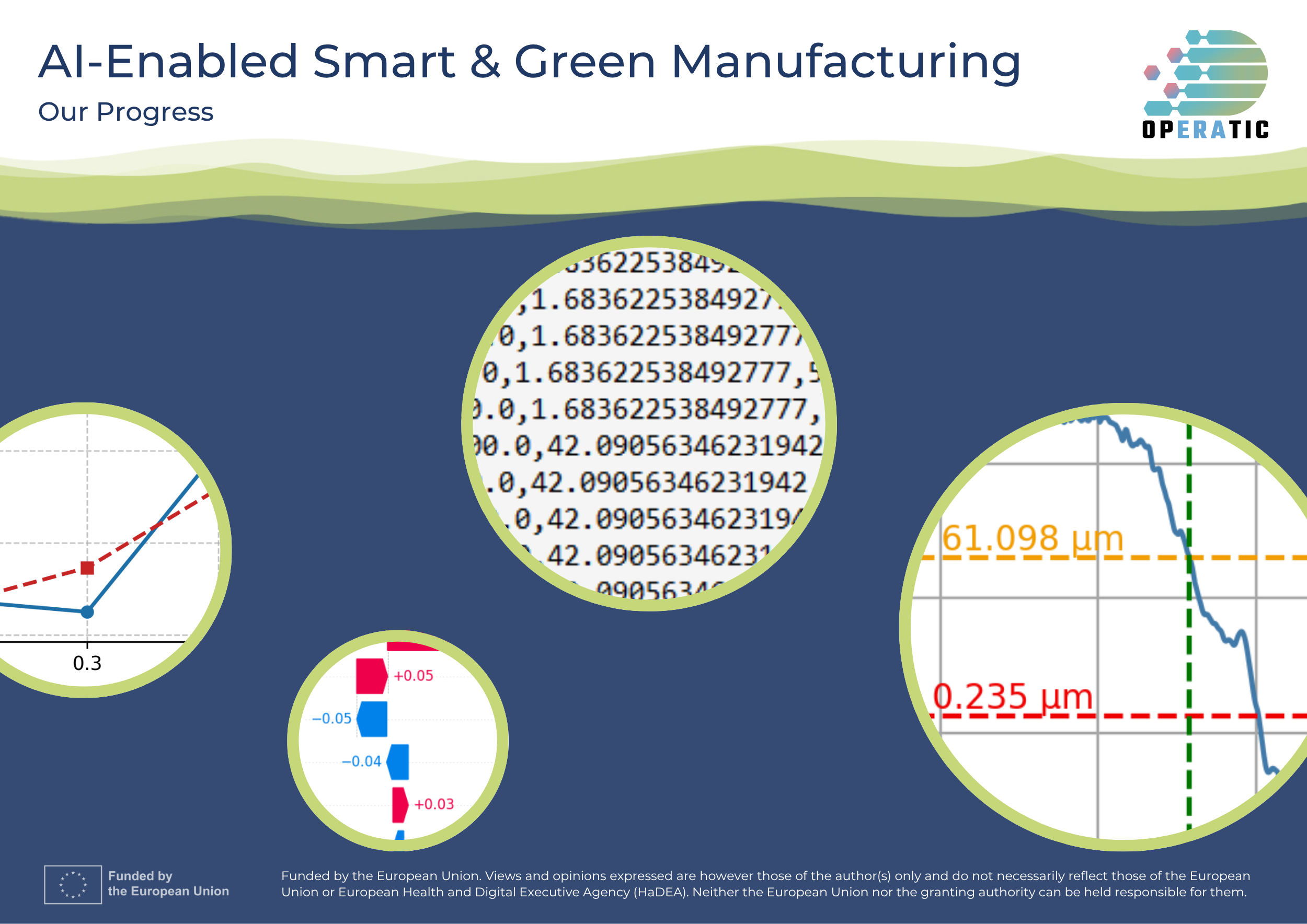
OPeraTIC has developed AI models to predict and optimize laser processing of direct laser writing. By integrating explainable AI methods such as SHAP and LIME, the models support deep process understanding rather than acting as black boxes. Transfer Learning techniques enabled simulation‑trained models to be adapted to real experiments and new materials with reduced experimental datasets.
Efficient, physics‑based data representations were validated, outperforming image‑heavy approaches. AI analyses revealed and quantified the physical drivers behind performance, fully aligning data‑driven results with established optical theory. AI generated phase maps could be used on the QiOVA SLM system to extend the depth of focus of the texturing patterns. Industrial readiness is being ensured through standardised data interfaces, OPC UA integration and zero‑defect manufacturing concepts.