OPeraTIC Final Event
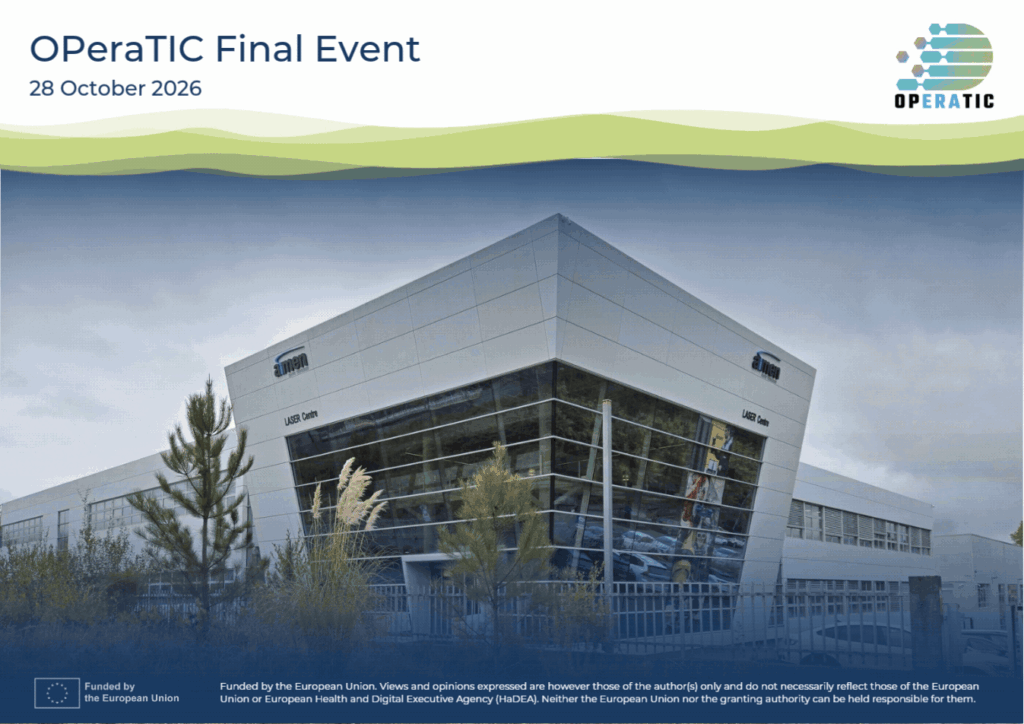
On 28 October 2026, we celebrated the OPeraTIC final event as part of the Ultrashort Pulse Laser Microfabrication Event: Shaping the Future of Manufacturing, together with FABulous and METAMORPHA at the AIMEN International Laser Week. OPeraTIC presentations highlighted the challenges of upscaling laser surface microstructuring, our novel optical chain for large-area surface engineering, and the […]
New Interview with OPeraTIC’s Coordinator

A new interview with OPeraTIC’s coordinator from AIMEN published by Springer Professional is now available! In the interview, Pablo highlights a challenge that is often overlooked: while new technologies drive innovation, their successful integration into a complete industrial system is where much of the real effort lies. Using OPeraTIC as an example, he discusses the […]
OPeraTIC at COLA2026
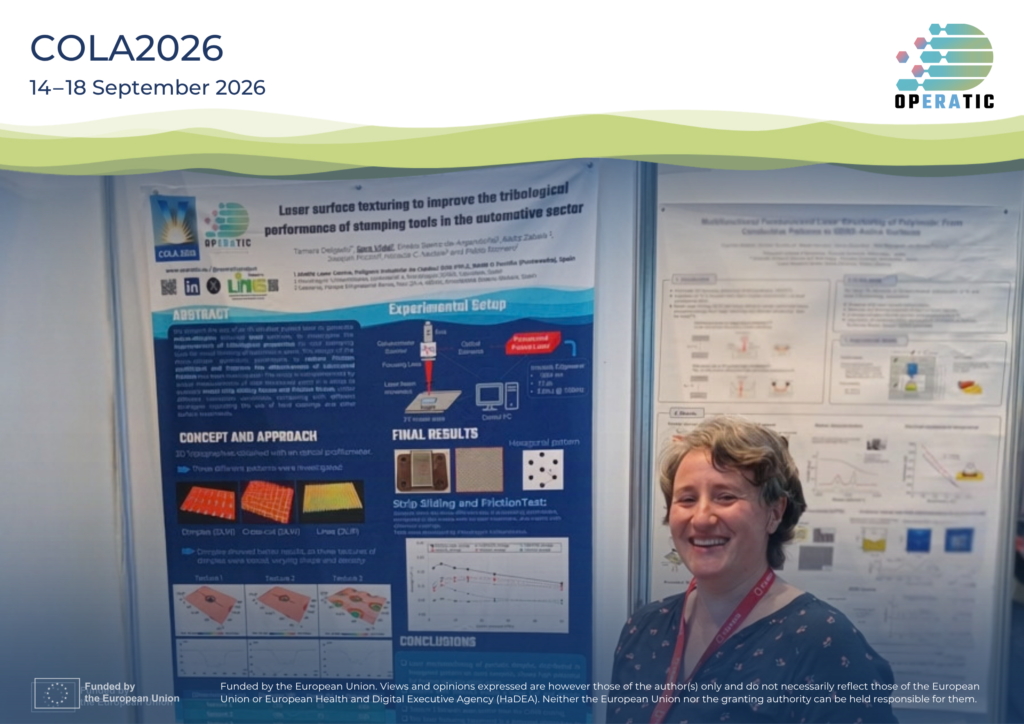
A few weeks ago, the International Conference on Laser Ablation (COLA2026) took place in Vilnius, Lithuania, bringing together researchers and industry experts working on the latest advances in laser ablation technologies. COLA has long been recognised as a key interdisciplinary forum, covering topics that bridge fundamental scientific research and real-world technological applications in laser processing. At the […]
New Joint Publication
We are excited to share a new joint publication from AIMEN and LASEA: “Adapting Laser Ablation Models from Simulation to Experiment: A Transfer Learning Approach for Stainless Steel, Silicon and Aluminum”. One of the key challenges in AI-driven manufacturing is making simulation models useful in the real world without requiring hundreds of costly and time-consuming […]
New Joint Publication
We are delighted to celebrate a new OPeraTIC publication exploring the social implications of advanced manufacturing technologies: “AI‑Enhanced Laser Manufacturing: A Social Life Cycle Perspective From the White Goods Industry.” The paper by the University of Warwick and Arçelik Türkiye investigates how the transition from conventional manufacturing processes to AI‑enhanced laser manufacturing can influence the social dimension […]
OPeraTIC at IIW2026
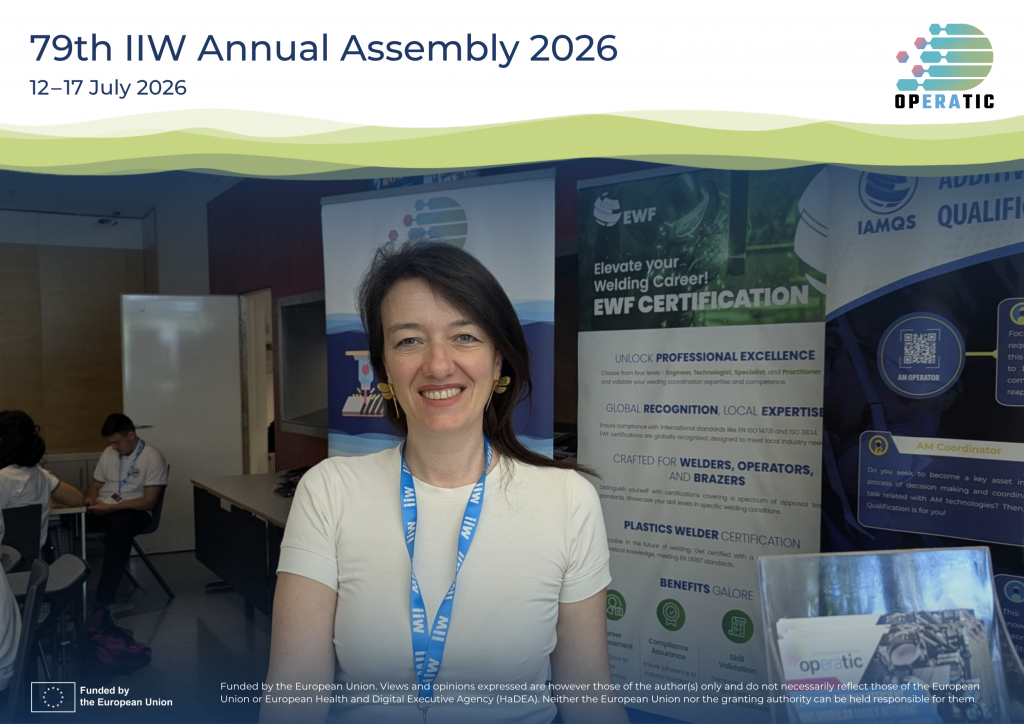
Last month, OPeraTIC was represented by EWF at the 79th IIW Annual Assembly 2026 in Salzburg, Austria. The IIW (International Institute of Welding) Annual Assembly brought together the international welding, joining and manufacturing community to exchange knowledge, discuss technological advances and shape future developments in the sector. During the event, a general overview of the OPeraTIC […]
New Joint Publication
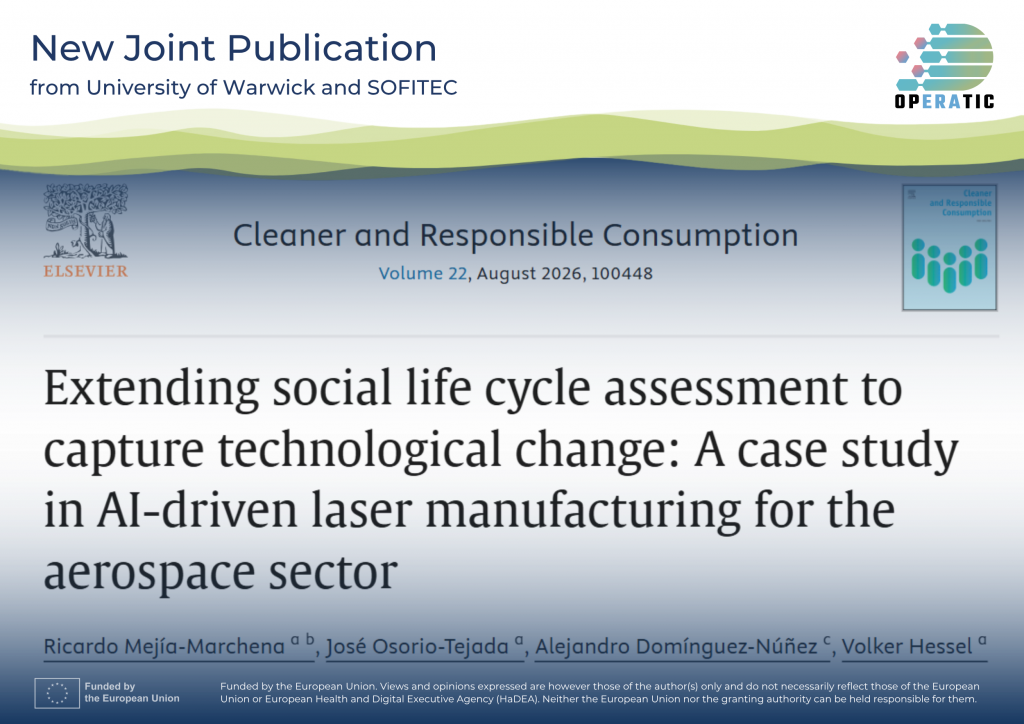
We are excited to celebrate a new OPeraTIC joint publication led by the University of Warwick and SOFITEC. The paper, “Extending Social Life Cycle Assessment to Capture Technological Change: A Case Study in AI-Driven Laser Manufacturing for the Aerospace Sector”, represents an important contribution to both sustainable manufacturing and social impact assessment. The study explores the […]
OPeraTIC Final Event – Save the Date
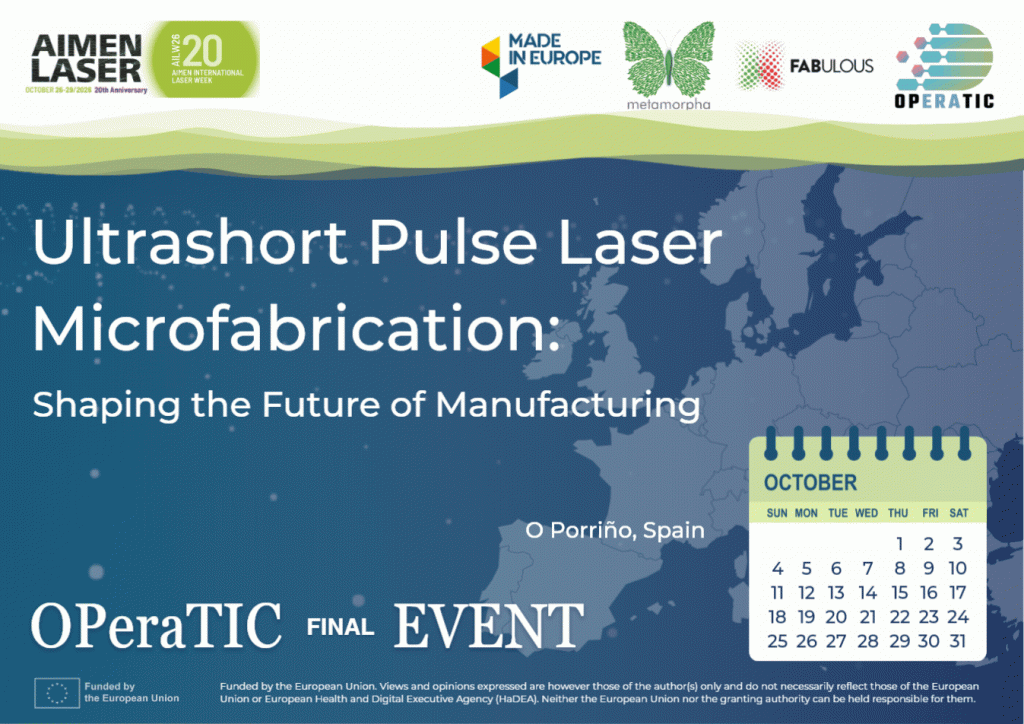
Join us at the “Laser Ultrashort Pulse Laser Microfabrication: Shaping the Future of Manufacturing” during the AIMEN International Laser Week 2026. OPeraTIC will host its final event there, joining forces with FABulous and METAMORPHA on 28 October 2026 in O Porriño, Spain. What can you expect? A forward-looking seminar on advanced microfabrication technologies for the […]
Green Manufacturing Use-Case Validation

With around half a year remaining, OPeraTIC has moved from concept validation to concrete, use‑case‑driven industrial groundwork. A comprehensive laser process database has been created, covering multiple materials and functional surface patterns achievable with the OPeraTIC machine. Key hardware components — optical components and robotic manipulator — have been mechanically and electrically integrated into the […]
AI-Enabled Smart & Green Manufacturing
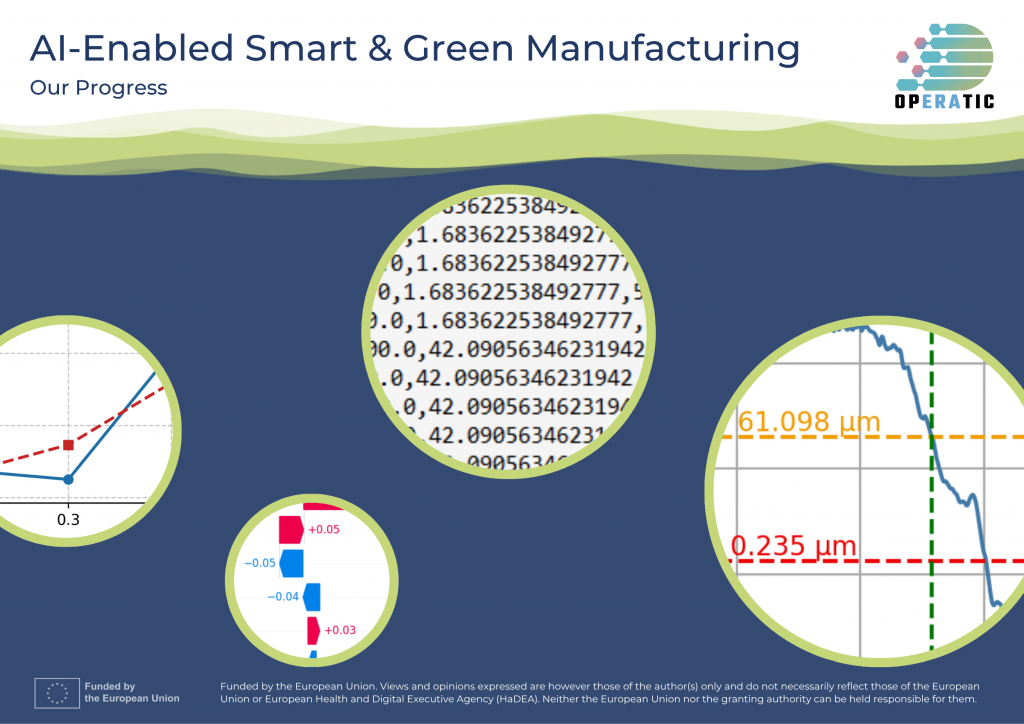
With half a year to go until the end of OPeraTIC, the project has reached a mature and highly impactful stage. OPeraTIC has developed AI models to predict and optimize laser processing of direct laser writing. By integrating explainable AI methods such as SHAP and LIME, the models support deep process understanding rather than acting […]